Key takeaways
Fill, sign, and submit IFR Navigation Log from any browser — or have AI generate a custom version in seconds. No installs, no printing, no back-and-forth.
- The IFR Navigation Log helps pilots fulfill preflight action requirements under 14 CFR 91.103 for Instrument Flight Rules operations.
- Pilots preparing for IFR flights use this document to systematically record route details, weather data, and fuel calculations.
- Required fields include the aircraft number, departure and destination points, estimated time enroute, and total fuel on board.
- It serves as a working document to track critical parameters like VOR data, wind, and ground speed during flight.
- This form assists in planning alternative airports and ensuring sufficient fuel is available for the intended route.
- Proper completion of this log helps ensure compliance with Federal Aviation Administration safety regulations during instrument operations.
What is IFR Navigation Log?
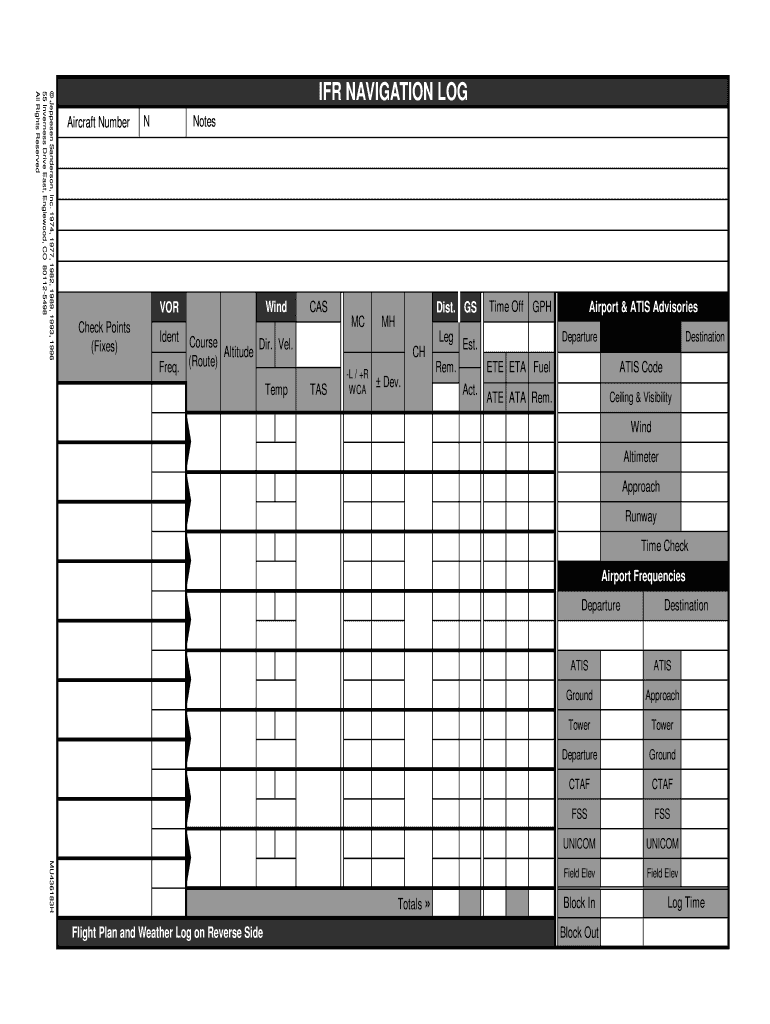
IFR Navigation Log is a working document used by pilots to comply with preflight action requirements established by Federal Aviation Administration regulations for flights under Instrument Flight Rules. This tool helps aviators systematically record essential flight details as mandated by 14 CFR 91.103, ensuring that all necessary information is reviewed before departure. By documenting route parameters and aircraft performance data, pilots can maintain a high level of situational awareness and safety throughout their planned journey in controlled airspace.
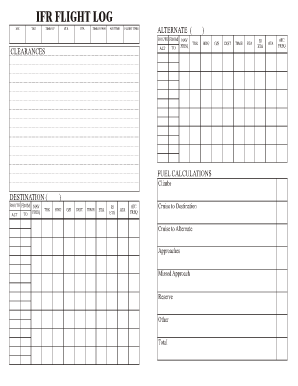
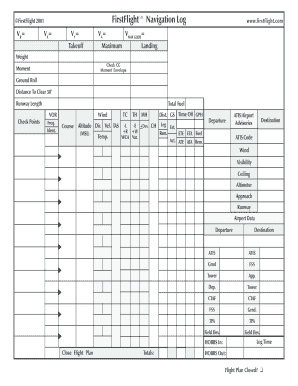
The document captures critical information such as the aircraft number, departure and destination points, and estimated time enroute. It includes specific fields for tracking wind corrections, ground speed, and fuel on board, alongside sections for a flight plan and weather log. Utilizing a pilot flight log allows for the efficient monitoring of fuel consumption and navigation progress while providing a structured format to manage alternative airport options. This ensures that the pilot remains compliant with federal safety standards during complex IFR operations.
Federal Aviation Administration (FAA)
Who needs the IFR Navigation Log — and who doesn't
Not everyone files IFR Navigation Log. The checklist below tells you whether it applies to your situation — and points you to the right alternative if it doesn't.
You need this IFR Navigation Log if…
- You are a pilot preparing to conduct a flight under Instrument Flight Rules (IFR).
- You must fulfill the mandatory preflight action requirements established by 14 CFR 91.103.
- You require a structured method to track and record critical flight data such as fuel on board, estimated time enroute, and weather conditions.
You do not need this IFR Navigation Log if…
- You are conducting a flight under Visual Flight Rules (VFR) rather than Instrument Flight Rules.
- You are not a pilot or are not responsible for the preflight planning and navigation of the aircraft.
Why you need the IFR Navigation Log
Why people fill out IFR Navigation Log, and what tends to go wrong when they don't.
-
Ensure Regulatory Compliance Completing the IFR Navigation Log helps pilots fulfill preflight action requirements mandated by 14 CFR 91.103. Proper documentation demonstrates compliance with safety regulations and prepares you for potential FAA enforcement reviews.
-
Enhance Operational Safety Tracking critical parameters such as fuel on board, weather conditions, and alternative airports ensures higher situational awareness. This systematic approach allows for safer decision-making during complex Instrument Flight Rules operations.
-
Optimize Navigation Accuracy Utilize dedicated fields for VOR wind calculations, ground speed, and estimated time enroute to maintain precise flight paths. Recording these technical details helps manage timing and fuel consumption throughout the flight.
-
Streamline Digital Records Use pdfFiller to fill, edit, and manage your navigation logs in secure encrypted storage. This online platform allows you to annotate documents, rearrange pages, and share completed logs via email or link.
What each section of IFR Navigation Log means
Every section explained — what it's asking, the records you'll need on hand, and the mistakes that most often cause a rejection or follow-up request.
| Aircraft Identification Number | Enter the specific registration number of the airplane used for the IFR flight to ensure the log correctly identifies the specific vessel and its equipment. |
|---|---|
| Departure and Destination | Record the starting airport and the final destination identifiers, including any alternate airports needed to satisfy safety regulations for instrument flight rule operations. |
| Estimated Time Enroute | Input the total projected time for the flight from wheels-up to arrival at the destination, which is critical for fuel planning and air traffic coordination. |
| Fuel Load Information | State the total quantity of fuel available at the start of the trip, ensuring it meets the legal requirements for the planned route plus reserves. |
| VOR and Wind Calculations | Fill in technical details such as VOR frequencies, wind correction angles, calibrated airspeed, and distances for each leg to maintain an accurate navigational track. |
| Ground Speed and Timing | Log the actual ground speed and the time of departure to monitor progress against the flight plan and update arrival estimates for upcoming waypoints. |
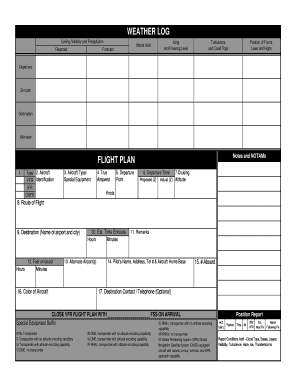
| Flight Plan and Weather | Utilize the designated space for recording detailed weather observations and flight plan specifics, often found on the reverse side of the navigation log document. |
How to fill out IFR Navigation Log using pdfFiller
A walkthrough from the first field to the signature line. With your records in front of you, most people finish in under ten minutes.
-
Open the document Click Get Form to open IFR Navigation Log in the pdfFiller editor and immediately begin customizing your document using the platform’s comprehensive suite of online editing tools.
-
Enter aircraft identification Use the text tool to click on the 'Aircraft Number' field and type your registration details to start this flight planning form with accurate identification data.
-
Input navigation data Locate fields for 'VOR Wind CAS Dist.' and 'GS Time Off' to enter your calculated wind corrections, distances, and ground speed time estimates directly into the document.
-
Specify route details Fill in the departure and destination points and the estimated time enroute to ensure your navigation log accurately reflects your planned flight path and timing calculations.
-
Record fuel levels Click the 'Fuel on Board' field to enter the total fuel quantity, a critical safety element for completing your aircraft log template for preflight compliance.
-
Complete reverse log Use the annotation tools to provide details for the Flight Plan and Weather Log on the reverse side block out section for a complete flight record.
-
Review flight data Thoroughly examine all sections of the document within the pdfFiller editor to confirm that all planned parameters are correct, legible, and ready for your IFR operation.
-
Save and export Click the 'Done' button to save your progress in secure storage, then download the PDF, print a hard copy, or share it via email for easy access.
Deadlines, key dates & penalties for IFR Navigation Log
When IFR Navigation Log is due, what late filing actually costs, and how to request more time if you need it.
| Penalties for Non-Compliance | Failure to perform adequate preflight action as required by 14 CFR 91.103 could result in FAA enforcement action, including civil penalties or suspension/revocation of pilot certificates. |
|---|
Related content
The forms, guides, and worksheets most filers reach for alongside IFR Navigation Log.
Key terms used in IFR Navigation Log
A one-sentence glossary of the IFR Navigation Log terms and concepts you'll see throughout this guide.
- Aircraft Number
- The unique identification code assigned to an aircraft, typically displayed on the tail for tracking and communication purposes.
- VOR
- Very High Frequency Omnidirectional Range, a ground-based electronic navigation aid used by pilots to determine their position and course.
- CAS
- Calibrated Airspeed, representing the indicated airspeed of the aircraft adjusted for instrument and installation errors.
- GS
- Groundspeed, which is the horizontal speed of an aircraft relative to the surface of the earth.
- Time Off
- The exact moment an aircraft becomes airborne after takeoff, used for calculating flight duration and fuel consumption.
- IFR
- Instrument Flight Rules, a set of regulations for flying an aircraft when visibility is low and pilots rely on instruments.
Frequently asked questions about IFR Navigation Log
Quick answers to the questions we hear most often about completing the IFR Navigation Log.
The IFR Navigation Log is used by pilots to systematically record essential flight details and fulfill preflight action requirements under 14 CFR 91.103. This working document helps airmen track critical parameters such as route, weather, and fuel on board. Using the log ensures safer navigation and regulatory compliance during Instrument Flight Rules operations.
Pilots conducting flights under Instrument Flight Rules (IFR) must perform preflight action as required by regulation, which typically involves preparing and referring to a navigation log. Preparing and referring to these logs is a standard regulatory practice for ensuring flight safety. It allows pilots to manage complex information like estimated time enroute and alternative airport options effectively before and during the flight.
An aviation navigation form typically includes fields for the aircraft number, departure and destination details, estimated time enroute, and fuel on board. It also provides space for technical data such as ground speed calculations and VOR wind distance parameters. Pilots use these sections to organize their flight plan and weather log, ensuring all necessary navigation data is accessible.
Failure to perform adequate preflight action as required by 14 CFR 91.103 can lead to FAA enforcement actions, including civil penalties or the suspension of pilot certificates. Because this documentation helps prove compliance with safety regulations, neglecting its use can be a serious issue. Maintaining accurate records is essential for any pilot operating under Instrument Flight Rules.
Yes, you can use pdfFiller to fill out, edit, and manage your navigation records directly in your web browser. This online platform allows you to enter flight details, record calculations, and save or download the finished PDF for use in the cockpit. You can also share the completed record via email or link with co-pilots or flight instructors.
There is no specific, officially numbered Federal Aviation Administration (FAA) form for this type of record, as it is a general term for templates created by pilots. While the FAA requires preflight planning under 14 CFR 91.103, airmen are free to use various formats that capture necessary flight data. These logs typically help organize critical information like route checkpoints and weather updates.